
The 2026 Constitutional Amendments On Your Ballot
Utah voters will have the final decision on two changes to the state constitution this November. While regular statues are passed by the Utah Legislature without requiring an additional vote by the people, any amendments to the constitution require a simple majority by the citizens to pass, just like how an amendment to the US constitution requires extra input from the states.
This year, there are two changes up for consideration– Amendment A, which changes how proposed amendments are published, and Amendment B, which raises the vote needed for citizen initiatives that affect taxes. Both will sit at the end of the ballot, after the candidate races and before the judicial retention questions, and deserve just as much attention as the candidates, especially since constitutional amendments are often very difficult to undo.
Keep reading to learn more about these amendments and what they would mean for Utah.
What is a constitutional amendment?
Just like the US Constitution, Utah has a Constitution that acts as the state’s core guide and reference. It sets up the three branches of government, lists the rights of Utahns, and lays out the ground rules every other law has to follow. And, just like in the US Constitution, an amendment is a change such as adding a provision, removing one, or rewriting existing language.
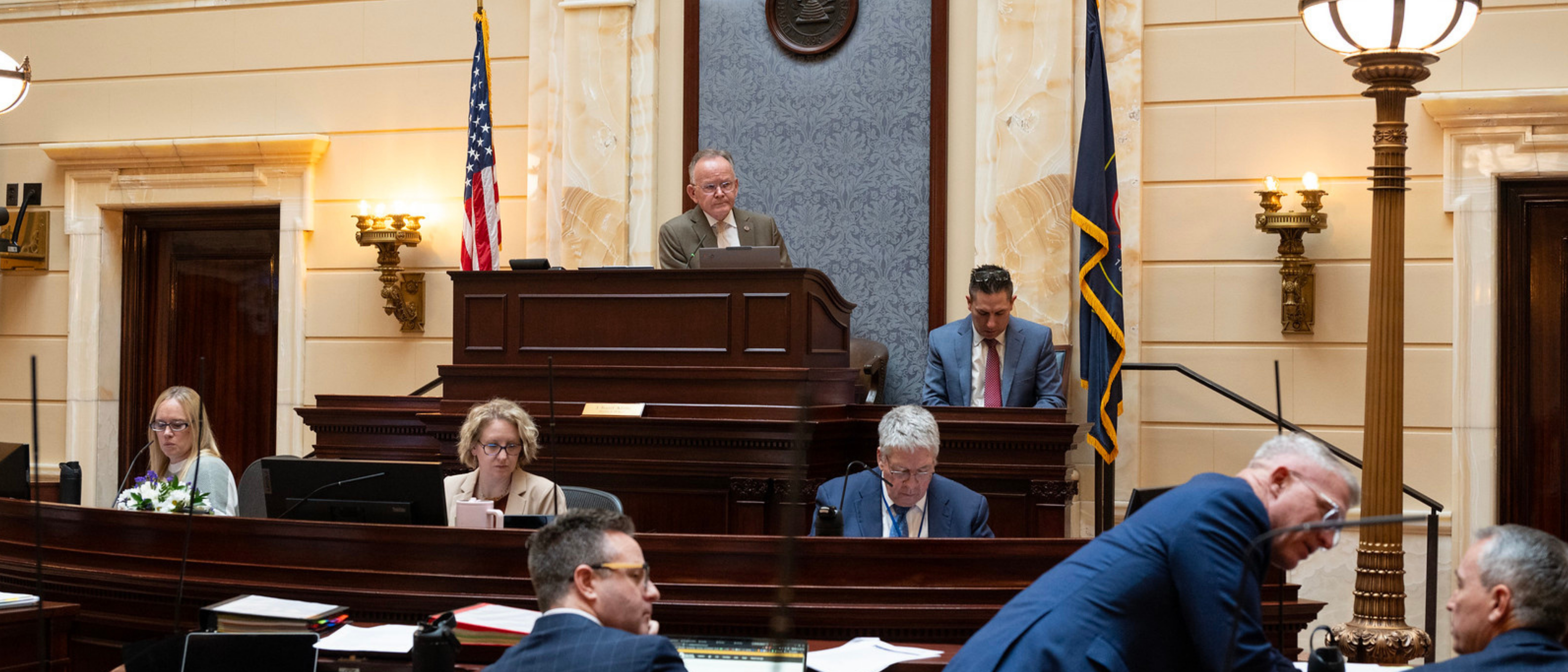
Per the Utah Constitution, if an amendment is made by the Legislature during the General Legislative Session, the change must be approved by the people. It also requires a supermajority vote by the State House and Senate. The path usually looks like this:
1. A legislator introduces the amendment as a joint resolution in the House or Senate.
2. Two-thirds of all members elected to each chamber must vote yes. This is a higher bar than the simple majority needed for a regular bill.
3. The amendment goes on the next general election ballot, and its full text is published ahead of the vote (at least 60 days).
4. If more than half of voters approve it (a simple majority of voters), the amendment becomes part of the constitution.
Because the constitution limits what lawmakers can do, the people it governs get the final word on changing it. Your vote on an amendment is a direct say in the rules of state government, with no representative in between.
Utahns can also pass laws directly through citizen initiatives, which gather signatures and appear as numbered propositions. There aren’t any on the ballot this year, but some notable citizen initiatives in the past have prohibited the State Board of Health from adding fluoride to water unless approved first, created an independent redistricting commission for federal and state legislative maps, expanded Medicaid eligibility, and established a framework for medical cannabis.
The 2026 amendments
Amendment A: Publishing Amendments Online
Right now the Utah Constitution requires every proposed amendment to be printed in a newspaper in each county for two months before the election. Amendment A replaces that with a 60-day publication period carried out however state law directs. A companion bill, HB 481 (2025), already spells out the new method where the Lieutenant Governor would post the full text of each ballot question on the Utah Public Notice website and the Lieutenant Governor's website.
The amendment does not change how amendments are proposed or approved, only where voters find the text. While the newspapers will still publish content about the Amendments and notify the public of their existence, the entirety of the amendment is only required to be published by the state online.
• A yes vote moves publication requirements from newspapers to a method set in state law.
• A no vote keeps the current newspaper requirement.
Supporter Rep. Anthony Loubet said of the change, “One thing we learned last year is that when it comes to constitutional amendments, our constitution has its own separate notice requirement. And that requirement requires two months publication in a newspaper, physical print. Back in the day, that was a great way of communicating with people. People received their newspapers daily and that would be [a] good method of notification. Unfortunately nowadays that’s not true any longer."
It passed the Senate 29–0 and the House 70–0. If approved, it takes effect January 1, 2027, and could save the state up to $1.4 million every two years.
Amendment B: A 60% Threshold for Initiatives that Affect Taxes
Amendment B would require at least 60% voter approval for a statewide citizen initiative that does any of the following:
• Creates a new tax
• Expands an existing tax to new items or transactions
• Raises an existing tax rate
• Changes property taxes so the rate drops less than current law would otherwise require
It would apply to initiatives voted on after November 1, 2026. Most other initiatives would still pass with a simple majority, and tax increases passed by the Legislature would not be affected.
• A yes vote sets the 60% threshold for tax-raising initiatives.
• A no vote keeps the simple-majority rule for all initiatives except wildlife measures.
The amendment’s supporters argue that tax increases affect everyone and should have broad support, especially as initiatives are written by their sponsors alone, without public hearings or amendments along the way, and are hard to revise once passed. Legislators who raise taxes answer to voters at the next election while an initiative has no one to hold accountable.
The amendment’s opponents argue that the amendment holds voters to a stricter standard than the Legislature, which can still raise taxes by simple majority and makes the initiative process harder to use when lawmakers don't act.
It may be important to note that there is already a precedent for this higher threshold for citizen initiatives from Proposition 5 in 1998. This amendment passed to require a ⅔ majority vote for any future ballot initiatives changing Utah hunting or fishing regulations. Similar arguments for and against this change were brought up by citizens then as well, such as wanting to protect outside groups from influencing change in Utah laws but that the change makes the already difficult process even more complicated.
It passed the Senate 21–8 and the House 55–17. If approved, it takes effect November 23, 2026, with no material effect expected on state revenue or spending.
Before you vote
Election Day is Tuesday, November 3. Many Utahns vote by mail, so your ballot may have already arrived. Before you mark it, read about the amendments and the arguments for both sides to determine for yourself how you should vote. You can find all this information in the 2026 Voter Information Pamphlet. You can also confirm your registration, find drop boxes, and track your ballot.
At Doers Network, we believe Utahns make better decisions when they understand what’s actually going on in the races. Share this guide with a neighbor who might skip to the end, and stay tuned for more breakdowns of what's on your ballot.