
What's Going on with Bears Ears and Grand Staircase Escalante Monuments?
The President signed a proclamation to shrink two of the largest national monuments in Utah. What does this actually mean and how will it affect that public land?
First, some context.
Public land exists in all shapes and sizes across the country, and is controlled by different levels of government. Public land just means that it is owned by the government rather than by a corporation or individual. All states have some public land but the most federally owned land is in Alaska, Nevada, and Utah. In fact, the federal government owns about 64% (or 35 million acres) of Utah’s total land area, which is the second highest percentage of federal land ownership of any state in the United States.

Because of this unique feature of the state, public land ownership is a commonly discussed policy issue by lawmakers and an often misunderstood one by the public. Just last year, public land was a hot topic of debate in Utah after Congresswoman Celeste Maloy attempted to transfer ownership of small federal land parcels to Washington County and Senator Mike Lee attempted to sell different federal land parcels for real estate. Both measures failed after immense backlash but the debate has returned in a different form with President Trump’s shrinking of Bear’s Ears and Grand Escalante under the 1906 Antiquities Act.
National monuments like Bear’s Ears and Grand Escalante are a different type of federal land from the empty parcels the Congresswoman and Senator had attempted to reclassify last summer. They are designated to protect very specific natural, cultural, historical, or scientific features and so are very restricted in their usage. These are different from national parks, which are often used for broader scenic beauty and visitor recreation. They are created either by an act by Congress or by presidential proclamation under The Antiquities Act of 1906 and are usually managed by agencies like the Bureau of Land Management (BLM), US Forest Service, or the National Park Service, depending on where they are located.
Antiquities Act of 1906
Prior to the signing of the Antiquities Act, the western United States was becoming more and more of an exploration destination for scientists and tourists. People became concerned over the destruction or loss of important scientific information by private citizens collecting interesting artifacts and a federal law was passed to preserve America's archeological sites.
President Theodore Roosevelt signed the Antiquities Act on June 8th, 1906, which required permission to conduct archeological investigations on federal lands, authorized the President to establish national monuments from existing federal land, and established uniform rules and regulations to the enforcement of the Act. It specified that the area designated as a national monument must be “the smallest area compatible with the proper care and management of the objects to be protected.”

Since the Act was signed, several presidents from both parties have used its authority to designate or adjust national monuments. President Barack Obama carries the record of most monuments created at 29, including the Waco Mammoth National Monument in Texas and the Birmingham Civil Rights National Monument in Alabama. Utah has Presidents Herbert Hoover, William Howard Taft, and Woodrow Wilson to thank for many of its national monuments throughout the state. However, although presidential power had often been used to expand or create national monuments, it had never been used to shrink them.
Bears Ears and Grand Staircase-Escalante National Monuments
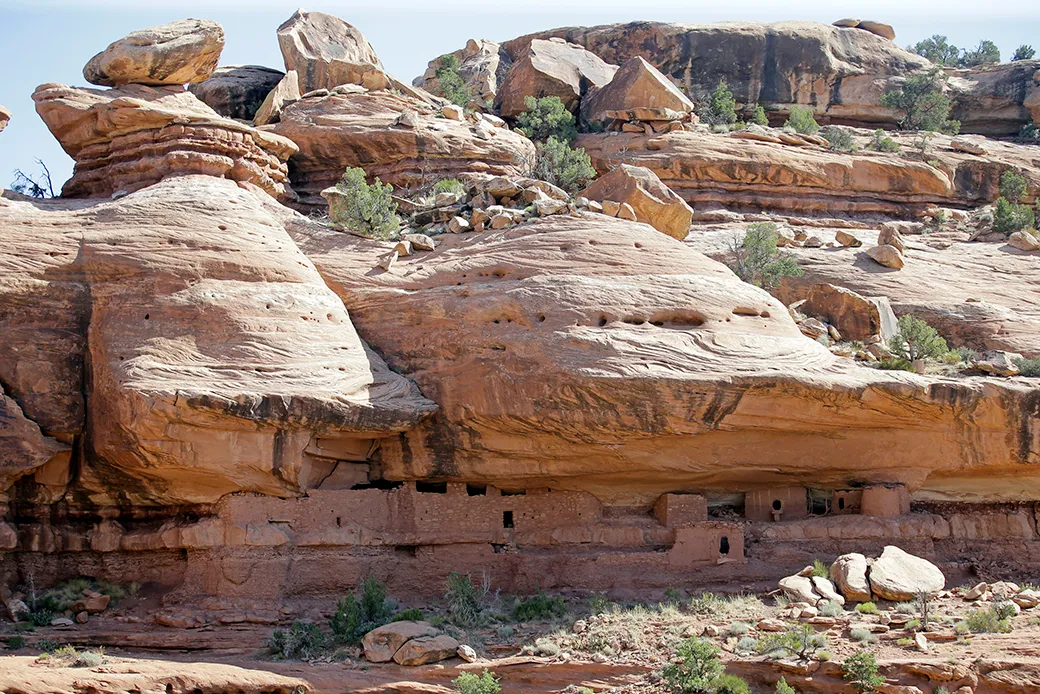
Established in 2016 by President Barack Obama, Bears Ears National Monument originally covered around 1.36 million acres in southeastern Utah. The area is known for its dense concentration of cultural and archeological resources, including sites of ancient villages, cliff dwellings, pictographs, and petroglyphs from thousands of years ago. The area also features two prominent buttes known as the Bears Ears, which are the ancestral homelands and sacred to several Native American tribes.
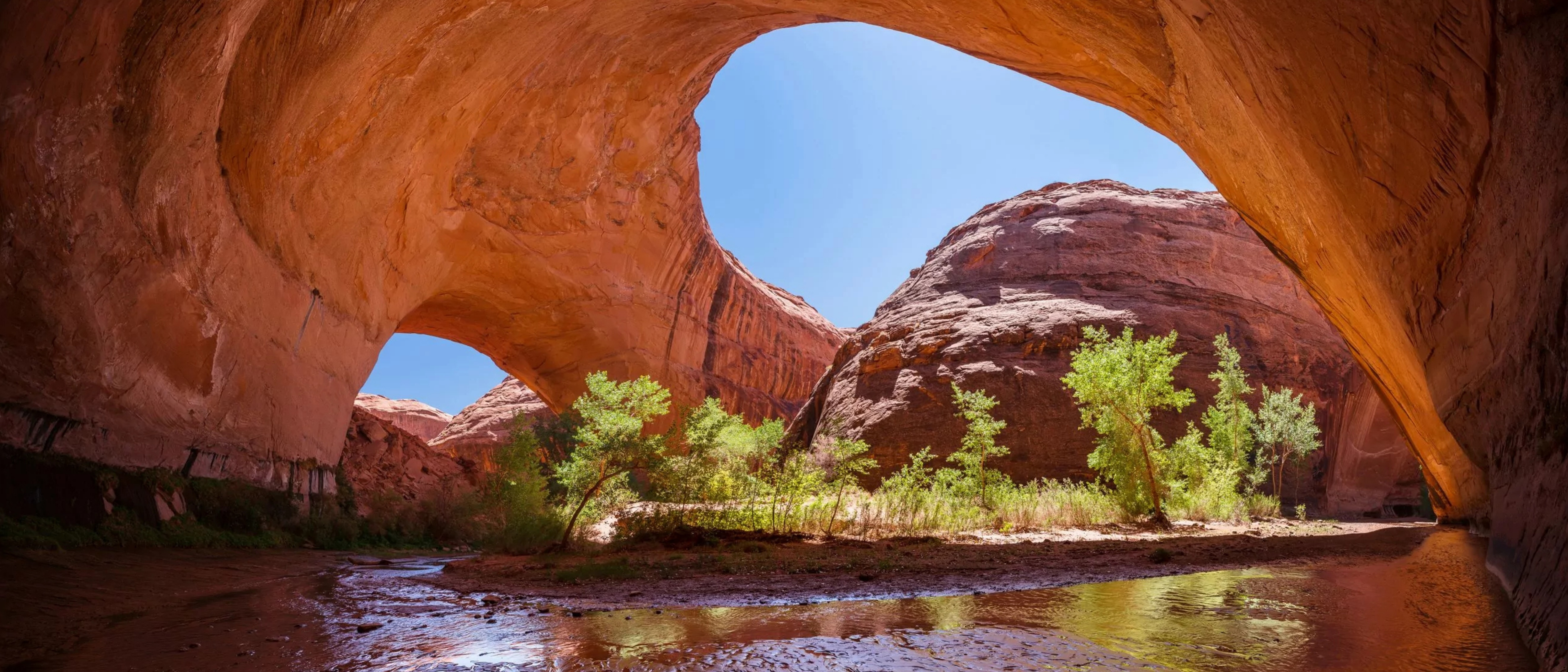
The Grand Staircase-Escalante National Monument was designated in 1996 by President Bill Clinton and originally spanned about 1.9 million acres. It is known for its dramatic geology of layered rock formations representing millions of years of Earth’s history, from the Permian to Cretaceous time periods. It also contained significant paleontological resources with numerous fossil sites.
In 2016, President Donald Trump signed proclamations reducing both monuments significantly in size. Bears Ears was reduced from 1.36 million acres to about 121,000 acres and Grand Staircase-Escalante was reduced from 1.87 acres to about 182,000 acres. The remaining protected areas were meant to be just the core sites identified as containing the primary objects of historic or scientific interest. The lands removed from the designation of national monuments remained federally protected public lands managed by BLM, just without the specific monument-level protections. This meant that the declassified land could be used for a broader range of activities, subject to existing laws and regulations, such as mineral extraction, energy development, timber, or expanded grazing if they comply with broader federal land management laws.
 In 2016, President Donald Trump
 When President Joe Biden entered the Oval Office, he undid this reduction issued by Trump and restored the monuments back to their original acreage. And in 2026, Trump reversed it again to his modified designation from 2016.
So what now?
This back and forth of executive orders is a new phenomenon and it’s difficult to predict what this is going to mean in the future.
The removed lands are still federal land, managed by the BLM. They are not up for sale for the highest bidder, although they could become available for mining, oil, or gas exploration depending on future management decisions. If this happens, they will still be subject to very strict permitting and regulations that could take years to get approved (by which time, the land could be re-designated again by another president). All future management plans will involve public processes, environmental reviews, and agency decisions.

It’s difficult to know exactly what will happen with this designation, and much of the discussion so far has been speculation. The proclamation changes how these lands may be managed, but it does not automatically approve new development or change ownership of the land itself. Any major changes would still require additional planning, permitting, environmental review, and, in many cases, opportunities for public input.
For now, the biggest change is legal rather than physical. The land remains federal public land, but a much smaller portion is now protected as a national monument. Whether that ultimately leads to significant changes on the ground will depend on future decisions made by federal agencies, the courts, and potentially future presidents.