
The Life of a Utah Bill
Every year, Utah lawmakers introduce hundreds of bills. Some become major pieces of legislation, some change one word in the code, and most receive little attention before quietly disappearing. Whether a bill deals with taxes, education, housing, water, or public safety, every law follows the same path through the Legislature before it reaches the governor’s desk.
For many Utahns, the process can seem hard to follow but it doesn’t have to be. Once you understand the basic steps, it’s much easier to follow what’s happening at the Capitol and know how to make a difference.
Drafting, Introduction, and the First Reading
Most bills start long before the legislative session begins, during the interim period.
They are filed by a member of the Utah House or Senate but they could come from a problem identified by a constituent, an update to an outdated law suggested by a business, a recommendation for a technical change by a state agency, or a larger agenda by the legislature or the governor.
After the legislator files the bill proposal, they work with legislative attorneys to draft the legal language. Once it’s ready (and once the legislative session begins) the bill is introduced first into the chamber that the legislator is a part of (the House or the Senate) and assigned a bill number.
House bills begin with HB while Senate bills begin with SB. The number simply reflects the order in which a bill was introduced during that year’s session. So SB 69 (2026) was the 69th bill introduced to the Senate during the 2026 general legislative session. If you’re looking for a bill, it’s very helpful to know the bill number and the year it was introduced. Even if the bill is added to or changed during the process, the bill number during the session will stay the same.
This introduction into the chamber is known as the First Reading. The bill’s title is read before it is referred to the Rules Committee, which decides which standing committee should review it next.
Committee
After the First Reading, all bills go to the Rules Committee, which assigns the bill to another committee that specializes in its subject matter. In the case of the aforementioned SB 69, the bill went to the Senate Education Committee because it was related to changes to cellphones in schools. A judicial bill, like HB 392, went to the House Rules Committee and then was assigned to the House Law Enforcement and Criminal Justice Committee.
These committees are where legislators first examine the bill in detail. The legislators on each committee are assigned there by the chamber leadership, usually because they have interest or expertise in those areas. They listen to the bill’s sponsor explain the proposal and ask them questions about the bill, debate its merits, and sometimes make amendments before voting on whether it should continue through the process.
This is also the easiest place for the public to participate. All committee meetings are public and can be attended in person or over Zoom. The schedule is posted 24 hours in advance, by law and can be found here. Utahns can submit testimony or speak directly to the lawmakers about the legislation that affects them. Some bills have very little testimony and some have a lot. The length of the debate and discussion is usually determined by the committee chair. You can find the past debate or discussion on a bill by clicking on the “Hearing and Debates” tab on the bill’s page, which can be helpful in determining why a legislator filed it and what the bill actually does.
Not every bill survives this stage. Most never make it out of committee because lawmakers disagree with a proposal, think it needs more work, or decide it should not advance that year. If they vote on a bill and it does not get a majority vote to pass the chamber, it won’t move forward and usually that’s the end of its journey. A bill can also be “tabled” which means to not vote on it either way and is also usually a death sentence for a bill that session.
First Chamber
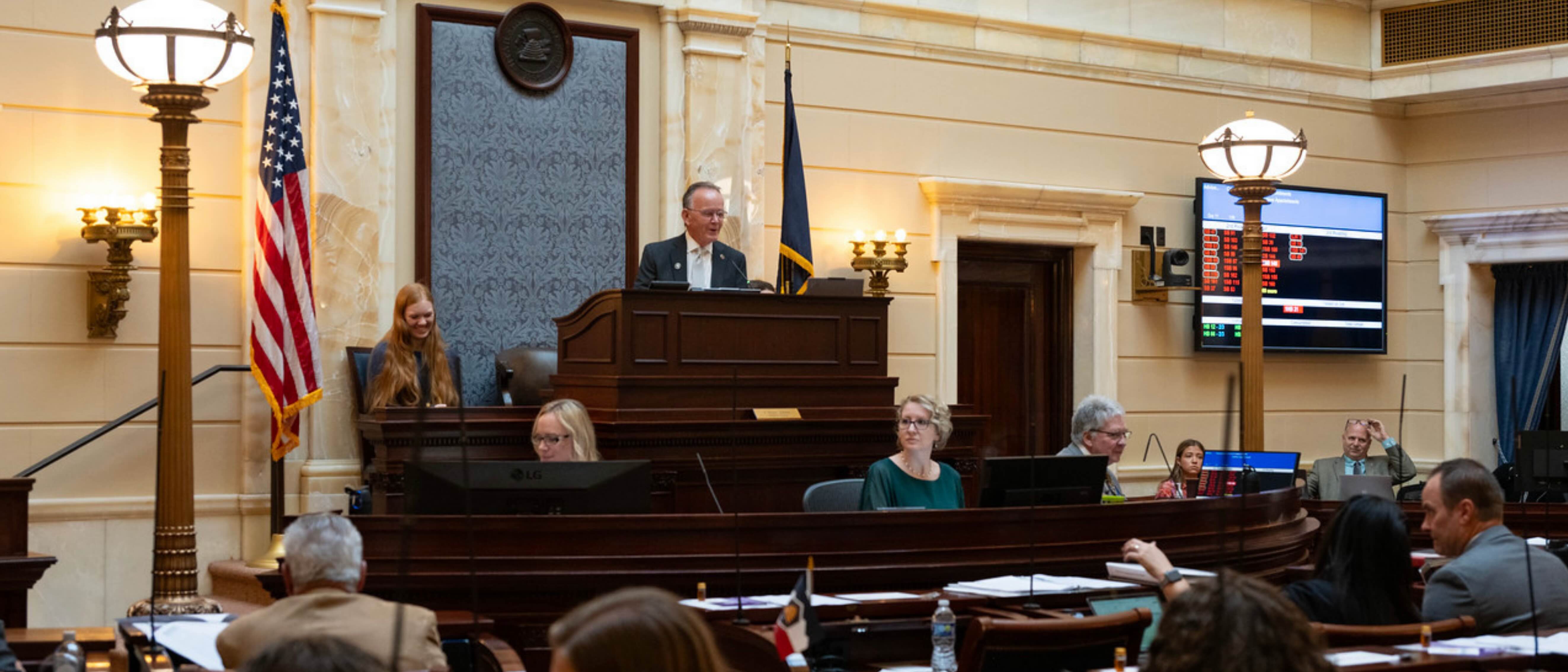
If the committee does recommend the bill, it then goes back to the full House or Senate (again, the chamber that it originated in) on the Second Reading Calendar, where the chamber formally accepts the committee’s recommendation and votes to advance it to the Third Reading Calendar. This is where the Senate and House diverge. The Senate allows for debate on the Second Reading Calendar, where the House does not, which usually means a bill is on the floor (up for debate) longer in the Senate than in the House. If the bill is voted on favorably by the entire chamber, it moves on to the Third Reading Calendar, where it is debated on as well as considered for additional amendments, and voted on again.
A simple majority vote sends the bill to the other chamber (a supermajority is not needed in the Senate like it is on the federal level).
Utah's Constitution requires every bill to receive three readings in each chamber before it can pass. Those readings take place at different points during the legislative process and give lawmakers multiple opportunities to review the legislation before casting a final vote, and also means that the legislators are expected to be familiar with the bill when they vote on it.
Second Chamber
And then the process begins again. The second chamber follows nearly the same process. The bill is introduced, sent to the Rules Committee, assigned to another committee, and then read and debated on the chamber floor. Sometimes the bill will pass one chamber but not the second one. Sometimes it passes without any changes and is sent to the governor.
But oftentimes the lawmakers will amend the proposal before approving it, which means it must be returned to the first chamber to be voted on again.
If the first chamber accepts the changes, they can accept the changes and the bill will pass. If not, the lawmakers may continue negotiating. If they come to a stalemate, a conference committee made up of both House and Senate members meet to work out a compromise.
Both chambers must approve the exact same version before a bill can become law.
The Executive Branch
Once both chambers pass the same bill, it is sent to the governor. He can sign it, veto it, or allow it to pass without a signature.
If the governor issues a veto, the Legislature may choose to override it with a two-thirds vote in both the House and Senate.
If the governor takes no action within the constitutional deadline (20 days), the bill becomes law automatically. Most Utah laws take effect 60 days after the legislative session ends unless the bill sets a different effective date or includes an emergency clause.
Becoming law is not the final step
Passing a bill changes the law, but implementation often takes longer.
State agencies may need to write administrative rules explaining how the new law will work in practice. Local governments, schools, businesses, and residents then begin operating under the new requirements.
That process can continue well after the legislative session has ended.
Why Utah's Legislature moves so quickly
Utah's regular legislative session lasts just 45 calendar days, the shortest of any state in the country.
During those six and a half weeks, lawmakers introduce hundreds of bills, pass a state budget, hold committee hearings, debate legislation, and vote on proposals that affect millions of Utahns.
The compressed schedule means much of the preparation happens before the session begins. Throughout the year, legislators meet in interim committees to study policy issues, hear from the public, and develop legislation for the next session.
Many of the bills introduced in January have already been discussed for months.
Following a bill yourself
The Utah Legislature makes the legislative process remarkably transparent.
You can search bills by topic or bill number on the Legislature website, read every version of a proposal, watch committee hearings and floor debates online, review fiscal notes that estimate a bill's financial impact, and create an account to follow specific bills.
You can also contact your representative or senator before a committee hearing or floor vote. Those conversations matter most while legislation is still moving through the process. Once a bill reaches the governor's desk, most of the important decisions have already been made. Contacting your legislator is most impactful when you know the actual details of the bill and where it is in the process. Some helpful tips:
-
Bills that the leadership are in favor of will move fast. Any bill that gets stuck somewhere for multiple days or even weeks is probably being soft killed and isn't worth worrying about.
-
Committee agendas must be posted 24 hours in advance but oftentimes that’s all you’ll get so if you’re worried about a bill, pay attention to it.
-
Legalese wording can be tricky, AI can’t read many government websites, and the media often sensationalizes stories If you want to know what a bill is actually doing, copy and paste the entire text into AI for a simplified version. It isn’t good at interpreting the bill but it can help make the bill easier to understand.
-
The legislators are working with lawyers and they’re often relative experts in the topics they run bills on. If you have a question about a bill and what it actually means, reach out to the sponsor and ask them directly.
-
Bills at the beginning of the session will get more committee time than bills at the end because the session starts moving incredibly fast in the last few weeks.
-
Legislators don’t have much influence over what happens in the other chamber. If a bill is in the House, call your Representative, not your Senator.
Understanding how a bill becomes law won't turn anyone into a legislative expert overnight. It does make it much easier to follow the debates happening at the Capitol and recognize when your input can influence the outcome before the decisions are final.
And don’t forget to follow along with us too! We’ll be keeping watch over important legislation when the session starts back up next year.