
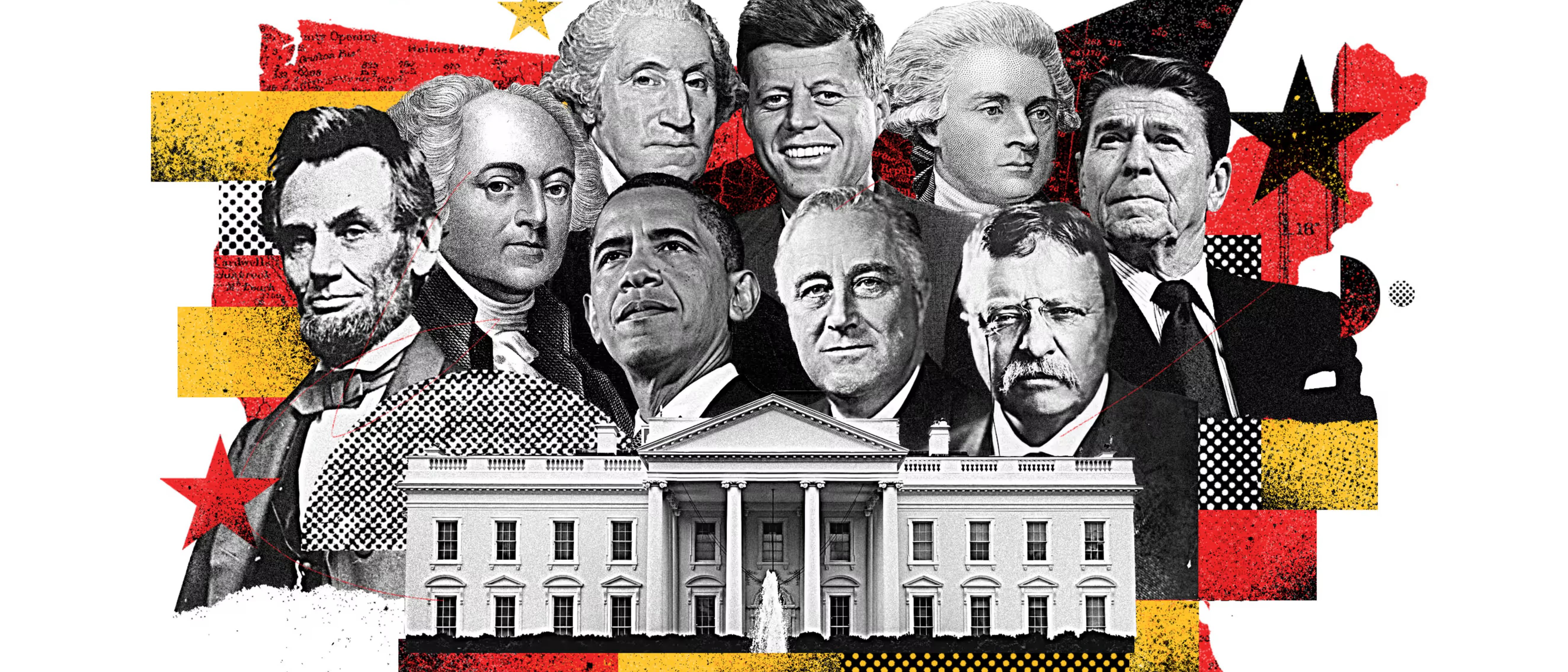
Top 10 Past Doers Presidents
Our website has a lot of examples of the candidates we’re supporting as “Doers” in the local Utah races this year. But what about past leaders? What about past Presidents?
For someone to qualify, they need to have integrity, be respectable, and produce conservative results. Here is our list of the top 10 “Doer” past Presidents of the United States.
#10 Ulysses S. Grant (18th President from 1869-1877)
Ulysses S. Grant was a President who was extremely committed to his values and principles, even at the cost of his political career. He was a military hero, graduating from West Point in 1843, and then serving in the Mexican-American War. His most well-known military service was in the American Civil War, where he won key victories at Fort Donelson, Vicksburg, and Chattanooga. He was later appointed commanding general of the Union Armies by President Lincoln.
Grant entered the Presidential office in 1869 during Reconstruction, following the tumultuous presidency of Andrew Johnson. The Civil War had ended just a few years before and the nation was torn by difficult questions and plans about how to resolve the conflicts left over. Grant believed that the way to preserve the Union was to protect the constitutional rights of formerly enslaved people. One of the roadblocks to this peace was the rise of political violence in the South, especially with groups like the Ku Klux Klan. In order to combat them, Grant encouraged the passing of the Enforcement Acts between 1870 and 1871 which allowed the federal government to arrest members of the KKK, suspend habeas corpus in areas with a lot of organized violence, and use federal troops to protect constitutional rights, leading to the prosecution of hundreds of Klan members.
Grant was also a strong supporter and protector of the Reconstruction Amendments, which abolished slavery, guaranteed equal protection under the law, and protected voting rights regardless of race. Unfortunately, many of his efforts were hampered by rampant government corruption at the time, in many ways due to Grant’s relationship with friends and political allies who abused his trust. Still, Grant was a stalwart champion of Constitutional rights for all and had a reputation of actually enforcing principles, not just believing in them.
#9 William McKinley (25th President from 1897-1901)
William McKinley entered the presidency at a pivotal moment in American history. After serving as a Union Army officer during the Civil War, a Congressman, and Governor of Ohio, he was elected President in 1896 as the nation struggled to recover from the Panic of 1893. McKinley campaigned on restoring economic stability through sound money, protective tariffs, and encouraging American industry. His victory marked the beginning of decades of Republican political dominance.
McKinley's first priority was rebuilding the economy. He signed the Dingley Tariff to protect American manufacturers and later signed the Gold Standard Act of 1900, bringing greater stability to the nation's financial system. Under his leadership, unemployment declined, manufacturing expanded, and the country entered a period of renewed economic growth.
Foreign affairs also defined his presidency. Although McKinley initially sought to avoid conflict with Spain, he ultimately led the nation through the Spanish-American War after diplomatic efforts failed. The brief conflict ended in a decisive American victory and established the United States as a growing world power. During his presidency, the United States acquired Puerto Rico, Guam, and the Philippines, while also annexing Hawaii.
McKinley was widely respected for his patience, humility, and personal integrity. He was reelected in 1900 but was assassinated just six months into his second term by an anarchist, elevating Theodore Roosevelt to the presidency. Though often overshadowed by his successor, McKinley's leadership helped restore the nation's economy and marked America's emergence as a major force on the world stage.
#8 Calvin Coolidge (30th President from 1923-1929)
Calvin Coolidge was a Doer who was never expecting to ever be President. He was already nationally well known as the Governor of Massachusetts when he called in the state militia to maintain order during the Boston Police Strike of 1919, and was elected Vice President in 1920 under Warren G. Harding. In 1923, Harding died unexpectedly of a heart attack in San Francisco and Coolidge was famously sworn into office across the country at his family home in rural Vermont by his father.
Harding had been an extremely popular president at the time of his death but almost immediately that reputation was tarnished by several major corruption cases, including the Teapot Dome Scandal. Coolidge set to work distancing his own administration from the scandal and fully cooperating with the investigation, determined to restore public trust in the presidency. He had a reputation for his integrity and emphasized the need for honesty and competency in higher offices.
Coolidge’s presidency was one of the strongest periods of economic growth in the country. Federal income tax rates were reduced several times, federal spending declines, the budget was balanced, and the national debt was significantly reduced. Coolidge believes that economic growth came from allowing businesses to grow without significant government interference. He was also dedicated to maintaining international peace following WWI and avoided overseas military intervention.
Despite his popularity, Coolidge decided not to run in 1928 and finished his term in 1929. His presidency was characterized by fiscal discipline for the federal government, as well as his ability to restore confidence in the higher offices after major political scandals, thanks to his personal honesty and humility.
#7 Ronald Reagan (40th President from 1981-1989)
Ronald Reagan is often categorized as one of the most influential conservative presidents in US history. His presidency redefined the Republican party and shaped the movement for decades to come. Reagan began his career in media as a sports broadcaster and an actor before becoming Governor of California from 1967 to 1975 and eventually President of the United States in 1981. Originally, he was a member of the Democratic Party but over time felt that the party had moved away from his beliefs about limited government and economic opportunity. He famously said, “I didn’t leave the Democratic Party. The party left me.”
When Reagan inherited the Oval Office, the country was facing serious economic trouble with high inflation, interest rates, and unemployment, as well as the distrust from the public with the Vietnam War, Watergate, and the Iranian hostage crisis. Reagan had four goals for his “Reaganomics” – lower taxes, reduced government regulation, controlling inflation, and strengthening economic growth. He signed the Economic Recovery Tax Act of 1981, which significantly reduced income taxes. He also worked to reduce regulations and coordinated with the Federal Reserve to bring inflation under control. During his presidency, inflation fell, millions of jobs were created, and the stock market rose significantly.
Reagan is also famous for his role in the final years of the Cold War, including famously encouraging Soviet leader Mikhail Gorbachev, “Mr. Gorbachev, tear down this wall.” Although the Soviet Union didn’t officially dissolve until after he left office, historians agree that Reagan’s diplomatic stance and anti-communist views were significant factors in the conclusion of the Cold War. He was known to be extremely optimistic and patriotic, as well as being a strong speaker.
Although Reagan has been criticized for the rise of the national deficit, an unfulfilled campaign promise that he called the “greatest disappointment of his presidency”, he won each of his terms extremely handily and left office with one of the highest approval ratings of any modern president. He was instrumental in defining the conservative movement and left a lasting legacy on the Republican Party and the country.
#6 Dwight D. Eisenhower (34th President from 1953-1961)
Dwight D. Eisenhower entered the White House after already earning a place among America's greatest military leaders. A graduate of West Point, Eisenhower served as Supreme Allied Commander during World War II, directing the D-Day invasion and coordinating the Allied campaign that defeated Nazi Germany. Following the war, he became one of the most respected figures in the country and was elected President in 1952.
One of Eisenhower's first accomplishments was bringing the Korean War to an end through an armistice in 1953. Throughout the Cold War, he emphasized peace through strength, maintaining a powerful military while avoiding direct conflict with the Soviet Union. His steady leadership helped guide the country through one of the most dangerous periods in modern history without escalating into another world war.
Eisenhower's greatest domestic achievement was the Federal-Aid Highway Act of 1956, which created the Interstate Highway System. The project transformed transportation, strengthened national defense, and remains the largest public works project in American history. He also governed with fiscal restraint, balancing the federal budget multiple times while keeping inflation relatively low.
Often described as a moderate Republican, Eisenhower believed in competent, disciplined government rather than ideological confrontation. He enforced the Supreme Court's school desegregation ruling in Little Rock, Arkansas, even when it was politically difficult, demonstrating his belief that the Constitution and the rule of law must be upheld. His presidency was marked by humility, stability, and practical leadership that produced lasting results.
#5 James Monroe (5th President from 1817-1825)
James Monroe’s Presidency marks a period of American history rarely experienced– calm, unity. He was the last Founding Father President and the last to have served in the Revolutionary War. He negotiated the Louisiana Purchase and served as the Secretary of State during the War of 1812 before being elected as President in 1816. Partially due to the decline of the Federalist Party following the war, the country entered an “Era of Good Feelings”, which saw a breakdown of partisanship, and in 1820, Monroe won all but one electoral vote for his reelection.
Monroe’s presidency was highlighted by expansion. He had negotiated the Louisiana Purchase years before and during his presidency, he supported the Westward Expansion even more. Mississippi, Illinois, Alabama, Maine, and Missouri all entered the Union, and infrastructure expanded across the nation. He also secured the Florida territory from Spain with the 1819 Adams-Onis Treaty and adjusted the northern border of the Louisiana Purchase in 1818 with the Anglo-American Convention.
Of course, Monroe’s greatest legacy was the Monroe Doctrine, which declared that the Western Hemisphere was closed to future European colonization, that the Americas were politically distinct from Europe, and that the US would stay out of internal European affairs. Although it couldn’t be strongly enforced at the time, the Monroe Doctrine became the foundation of US foreign policy.
With Monroe’s Presidency also came the Missouri Compromise, which was passed by Congress and signed by Monroe in 1820. Although it temporarily maintained balance between the North and South, it only delayed rather than solved the growing divide over slavery. This was characteristic of Monroe’s style. His presidency was one of keeping the peace as the country temporarily healed from deep partisan divides.
#4 James Madison (4th President from 1809-1817)
James Madison earned himself the title of “Doer” thanks to his more well known title “Father of the Constitution” for being the primary author of the United States Constitution and the Bill of Rights. He was also a close advisor to Washington during his presidency and instrumental in securing the Louisiana Purchase during his tenure as Secretary of State during Jefferson’s presidency. He was especially dedicated to maintaining a limited but functioning government, especially after the failures of the Articles of Confederation.
In 1809, Monroe succeeded Jefferson as President in a time of turmoil thanks to the Napoleonic Wars in Europe. In order to boost their naval power, Britain seized American ships and forced the sailors into service while France interfered with American commerce to enforce trade blockades against Britain. Madison initially attempted to solve the crisis through diplomacy and the controversial Embargo Act but these measures weren’t enough and hurt Americans more than the European targets, leading to Madison asking Congress to declare war on Britain in summer of 1812.
The war was not an easy win for the US. The country was unprepared and inexperienced and in 1814, British forces took Washington DC and burned the White House and Capitol building. However, Americans were able to turn the tide and win several key victories in Baltimore and New Orleans, famously leading to the writing of “The Star Spangled Banner.” Because of the war, Madison pivoted in his economic policy, such as supporting the creation of the Second Bank of the United States, protective tariffs that supported US manufacturing, and infrastructure improvements.
Although the burning of DC was a low point in his presidency, Madison stands out with his ability to adapt through difficult circumstances and bring the country out the other side even better than before. We also wouldn’t be able to let him pass as the writer of the great Constitution of the United States of America.
#3 Theodore Roosevelt (26th President from 1901-1909)
Theodore Roosevelt became President unexpectedly after the assassination of William McKinley in 1901, becoming the youngest person ever to assume the office. Before entering the White House, Roosevelt had served as a New York state legislator, Assistant Secretary of the Navy, leader of the Rough Riders during the Spanish-American War, Governor of New York, and Vice President. His energetic leadership style quickly transformed both the presidency and the role of the federal government.
Roosevelt believed that government had a responsibility to ensure fairness for workers, consumers, and businesses. His "Square Deal" sought to break up monopolies that abused their power, strengthen consumer protections, and reform the nation's industries. At the same time, he became one of America's greatest conservationists, creating national parks, monuments, forests, and wildlife refuges while protecting roughly 230 million acres of public land for future generations.
Roosevelt also dramatically expanded America's influence abroad. He strengthened the Navy, oversaw the construction of the Panama Canal, and helped negotiate an end to the Russo-Japanese War, becoming the first American to receive the Nobel Peace Prize. His foreign policy was summarized by his famous phrase, "Speak softly and carry a big stick."
Roosevelt's presidency demonstrated extraordinary energy and determination, though his willingness to expand presidential authority remains one of the biggest criticisms of his administration. Nevertheless, his lasting accomplishments in conservation, infrastructure, foreign policy, and government reform make him one of the most consequential presidents in American history.
#2 Abraham Lincoln (16th President from 1861-1865)
No list about Republican Doers would ever be complete without including the first Republican President and one of the greatest American presidents, Abraham Lincoln. He led the nation through one of the worst periods of its history and managed to preserve the entirety of the nation, and restored a great injustice in slavery. He was raced on the frontier and primarily self educated before serving as a lawyer, an Illinois state legislator, and one term as a US Representative. After the Kansas-Nebraska Act of 1854 allowed for slavery in the new territories, Lincoln became the leader of the new anti-slavery Republican Party.
Shortly after the 1860 election, seven Southern states voted to secede from the Union and in April 1861, the Civil War officially began. Lincoln believed that it was essential that the Union stay intact and that it was unconstitutional for any state to secede from it. For the rest of his Presidency, Lincoln was focused on the war effort. He cycled through several commanding generals before finally finding success with Ulysses S. Grant in 1864. Those who knew him reported that he aged significantly during his terms due to the stress of the war.
Although he had run on an anti-slavery platform, Lincoln’s primary goal throughout the Civil War was preserving the Union. But on January 1, 1863, he issued the Emancipation Proclamation, which declared all enslaved people in Confederate territory free, authorized the enlistment of Black soldiers into the army, and shifted the war’s primary purpose. He also later supported the 13th Amendment to the Constitution, which permanently abolished slavery in the United States of America.
Before and through his presidency, Lincoln was known to be a man of strong moral character. He was nicknamed “Honest Abe” because he was known to keep his word and treat his opponents fairly, and he often appointed political rivals to high ranking positions because he believed in the value of competing viewpoints. When the war ended in 1865, he was dedicated to heal the nation and restore it to being united across the country.
#1 George Washington (1st President from 1789-1797)
Finally, we have the President who has set the standard for each President following him, the great George Washington who created the office not just for the United States but for nearly every democracy that followed. He had the power to make the office be whatever he wanted it to be and instead he set the standard for limited government, rule of law, and limited terms that have shaped this nation. Before being elected as the First President of the United States, Washington served as a war hero in the French and Indian War and the Commander in Chief during the Revolutionary War. Despite the odds being against him, he led the scrappy colonial army against the greatest military power in the world and emerged victorious.
In 1783, Washington voluntarily resigned his military commission and returned to his home, planning on quietly retiring, but after the Articles of Confederation failed, he returned to preside over the Constitutional Convention. When the new Constitution took effect, it was clear who should be the first leader of the new Executive Branch and Washington was unanimously elected in 1789. Because the office was completely new, Washington had to create everything from scratch. He established the first Cabinet, organized the federal court system, supported the creation of the first national bank, and oversaw the implementation of the Constitution.
More than anything, Washington believed in the Constitution and knew it was important to enforce and protect. During the Whiskey Rebellion in 1791-1794, he led 13,000 troops to deescalate the situation and prove that the government could enforce federal laws. He also kept the US out of European conflicts and issued the Proclamation of Neutrality in 1793 toward the warring British and French, which set major precedent for foreign policy.
One of Washington’s greatest achievements as President was setting the precedent for a two-term presidency, a president that lasted until FDR. He could have remained in the office almost indefinitely but instead he stepped down after his second term and retired back to Mount Vernon as he originally attempted to do after the Revolutionary War. He was the ultimate “Doer President” for building the foundation of the republic and had the humility to let the country become something great.
What do you think of our list? Follow along for more takes on Doers leaders in American history.