
Utah's Role in America 250
This year, we celebrate the United States' 250th anniversary. While all eyes are on our country, let's take a look at the role Utah has played in this great nation and how often this state has been at the center of American history.
1776: The First Recorded Expedition

The same year the Founders signed the Declaration of Independence, two Spanish Franciscan priests, Fathers Francisco Atanasio Domínguez and Silvestre Vélez de Escalante, set out from Santa Fe searching for an overland route to Monterey, California. They never found it, but they passed through present-day Utah and left behind some of the earliest detailed European descriptions of its canyons, rivers, mountains, and terrain. Their journals and maps documented Utah for the first time and informed the work of every explorer who followed.
1824–1825: Jim Bridger and the Great Salt Lake
In the winter of 1824 to 1825, fur trapper Jim Bridger became one of the first European Americans to reach the shores of the Great Salt Lake. The story goes that he tasted the water, assumed he'd found an arm of the Pacific Ocean, and had to be corrected. The mountain men of this era moved through the West well ahead of the settlers who would follow, and their routes through Utah's valleys and passes became the trails that emigrants, soldiers, and eventually railroad crews would use for decades.
1846–1847: The Mormon Battalion and the Pioneers
When the Mexican-American War broke out in 1846, the U.S. Army requested 500 volunteer soldiers from the Church of Jesus Christ of Latter-day Saints. With the broader Mormon community in the middle of a westward migration and in desperate need of funds, their prophet Brigham Young agreed. The Mormon Battalion marched nearly 2,000 miles from Council Bluffs, Iowa to San Diego, California, the longest infantry march in American military history. They opened a southern wagon route to California that emigrants would follow for years.
That same summer, on July 24, 1847, Brigham Young led the first wave of pioneers into the Salt Lake Valley. They got to work immediately, breaking ground and digging irrigation ditches before the day was out. Over the next several decades, tens of thousands of settlers arrived and built the towns, farms, schools, and institutions that formed Utah's foundation and tamed the land that many thought was uninhabitable by permanent settlers. Brigham Young himself would go on to found the University of Utah in 1850 and Brigham Young University in 1875, two institutions that would become national leaders in business, science, and technology.
1848: The Treaty and the Gold Rush
The Treaty of Guadalupe Hidalgo, signed in February 1848, ended the Mexican-American War and transferred a vast stretch of territory to the United States, including present-day Utah. That treaty made Utah part of the American West and set the stage for everything that followed.
 The Treaty of Guadalupe Hidalgo, signed in February 1848, ended the Mexican-American War and transferred a vast stretch of territory to the United States, including present-day Utah. That treaty made Utah part of the American West and set the stage for everything that followed.
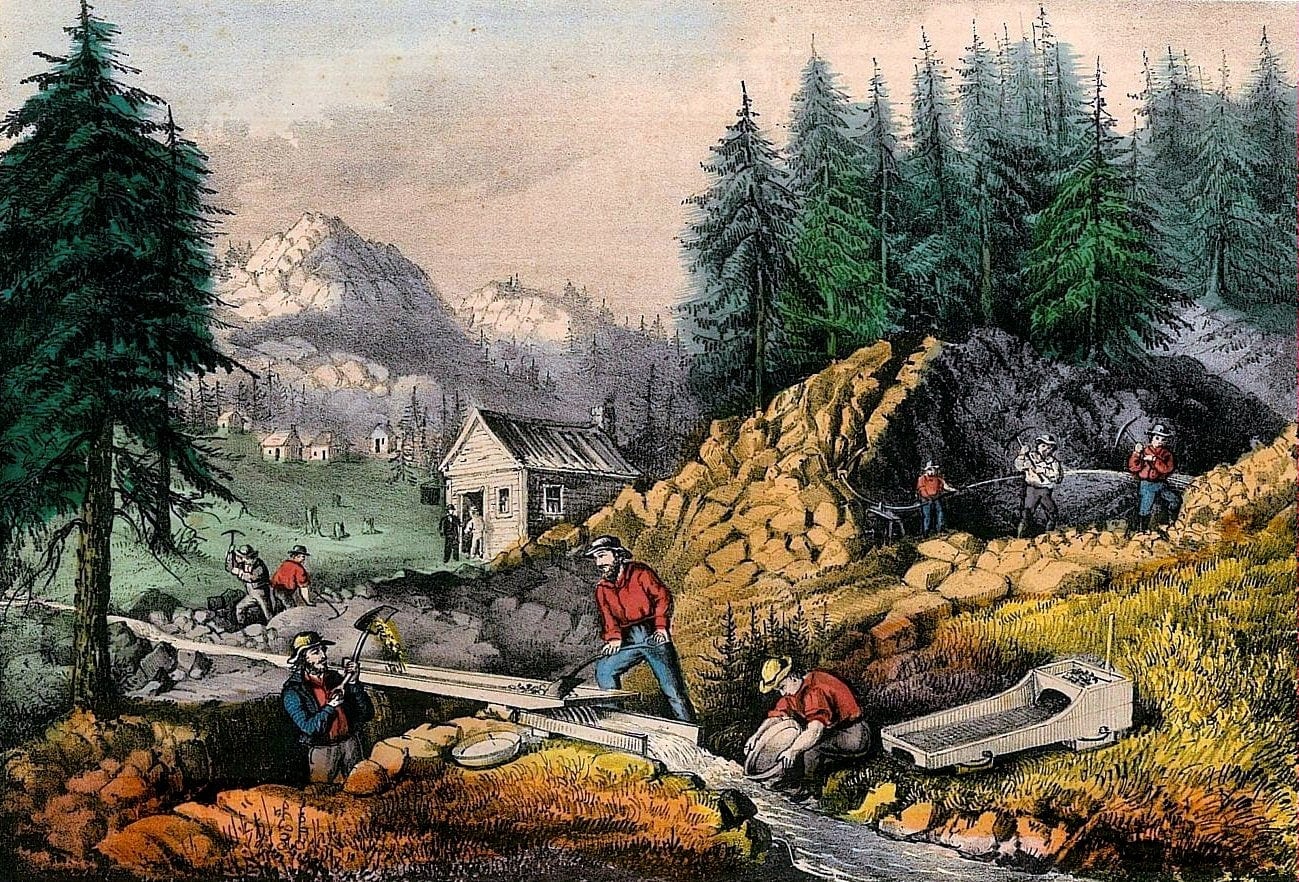
That same year, gold was discovered at Sutter's Mill in California. Several members of the recently discharged Mormon Battalion were present, among the first to witness and document the discovery. News traveled quickly, and Salt Lake City became a critical way station on the trail west. The Utah settlements offered food, supplies, rest, and repairs to tens of thousands of emigrants making the journey. Utah sat at the center of one of the largest migrations in American history.
1860–1861: The Pony Express and the Transcontinental Telegraph
In April 1860, the Pony Express launched its first run, carrying mail nearly 1,900 miles from St. Joseph, Missouri to Sacramento, California in roughly ten days. Salt Lake City was the largest and most important relay point along the route, sitting almost exactly at the midpoint. The Pony Express was an extraordinary logistical operation, and it made Utah central to the country's communication network.
Eighteen months later, on October 24, 1861, the first transcontinental telegraph was completed, with the two lines meeting in Salt Lake City. The Pony Express shut down two days later, replaced by a technology that made distance nearly irrelevant.
1869: The Golden Spike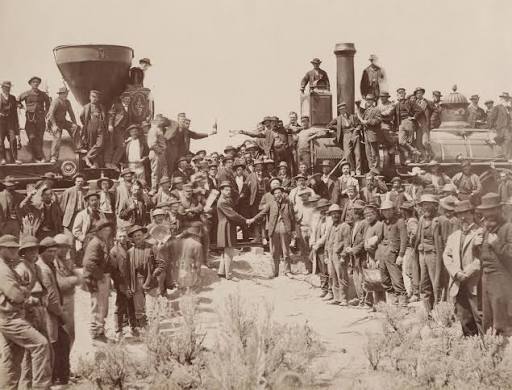
On May 10, 1869, the Central Pacific and Union Pacific railroads met at Promontory Summit, Utah, and a golden spike was driven into the ground completing the first transcontinental railroad. A continent that had taken months to cross could now be crossed in days. The railroad transformed Utah's economy almost immediately, turning Salt Lake City into a commercial hub for the Intermountain West. Utah went from frontier territory to regional center in the span of a generation.
1870 and 1896: Women's Suffrage
In February 1870, Seraph Young cast a ballot in a Salt Lake City municipal election, becoming the first woman in America to legally vote under a women's suffrage law in U.S. history. Utah's territorial legislature had granted women the right to vote just weeks earlier. That right was stripped away in 1887 when Congress passed the Edmunds-Tucker Act but when Utah was admitted as a state in 1896, women's suffrage was restored in the new state constitution, more than two decades before the 19th Amendment extended that right nationwide.
1896: The 45th State
Utah petitioned Congress for statehood seven times over nearly fifty years before being admitted to the Union on January 4, 1896. The delays reflected deep disagreements between the territory and the federal government, centered largely on the practice of polygamy and questions of governance. Once the Church officially discontinued plural marriage and the constitutional conditions were met, statehood followed. Utah entered the Union with its motto already in practice: "Industry." The beehive on the state seal meant what it always had: hard work, community, and building something durable.
1919–1971: Utah's National Parks
Utah has five national parks. Zion was established in 1919, Bryce Canyon in 1928, Arches in 1929, Canyonlands in 1964, and Capitol Reef in 1971. The decision to protect southern Utah's red rock landscape proved to be one of the most consequential conservation choices in American history. Today they collectively draw tens of millions of visitors every year from around the world.
 Utah has five national parks. Zion was established in 1919, Bryce Canyon in 1928, Arches in 1929, Canyonlands in 1964, and Capitol Reef in 1971. The decision to protect southern Utah's red rock landscape proved to be one of the most consequential conservation choices in American history. Today they collectively draw tens of millions of visitors every year from around the world.
1927: A Farm Boy from Utah Invents Television
Philo T. Farnsworth was born in 1906 in Beaver, Utah. At fourteen, while plowing a field, he worked out the concept for an all-electronic television system. By 1927, at age twenty-one, he transmitted the first true electronic television image. He spent years battling corporate giants like RCA to protect his patents, and while he never became a household name, the technology he developed became one of the defining features of modern life. Television was invented by a kid from Beaver, Utah.
1939: Skiing Comes to Utah
Alta opened in 1939 as one of the first organized ski resorts in the country, with lift tickets going for a quarter. Utah's mountains, which had challenged every early traveler through the region, eventually became world-class winter destinations, drawing athletes and visitors from around the globe and earning Utah its motto "Greatest Snow on Earth" in 1960.
1941–1945: On the Home Front
When the United States entered World War II, Utah mobilized. Hill Field, established north of Ogden in 1940, became one of the country's largest military aircraft depots, overhauling engines, repairing planes, and keeping American airpower operational. At its peak, the base employed tens of thousands of Utahns, many of whom had no prior experience with aircraft and learned while the war was underway.
Down in Utah Valley, the federal government built the Geneva Steel Plant in Vineyard specifically because it was safely inland from the coasts. It became the largest steel mill west of the Mississippi, and women made up a quarter of its workforce. Liberty Ships carrying Utah steel across the Pacific were named after Utah cities and figures. Out in the West Desert, Dugway Proving Ground was established in 1942 to test chemical and biological defense systems, chosen for its remoteness and open space. Utah contributed to the war effort on every front.
1950s–1960s: Fallout Over Utah
Nuclear weapons testing at the Nevada Test Site sent fallout drifting east across southern Utah through the 1950s and into the 1960s. The communities in Washington, Iron, and Kane counties, known as Downwinder Country, absorbed that exposure for years. In the decades that followed, residents reported unusually high rates of cancer. The Radiation Exposure Compensation Act, passed in 1990, acknowledged what those communities went through. It is a chapter of the Cold War that belongs in Utah's story.
2002: The World Comes to Salt Lake City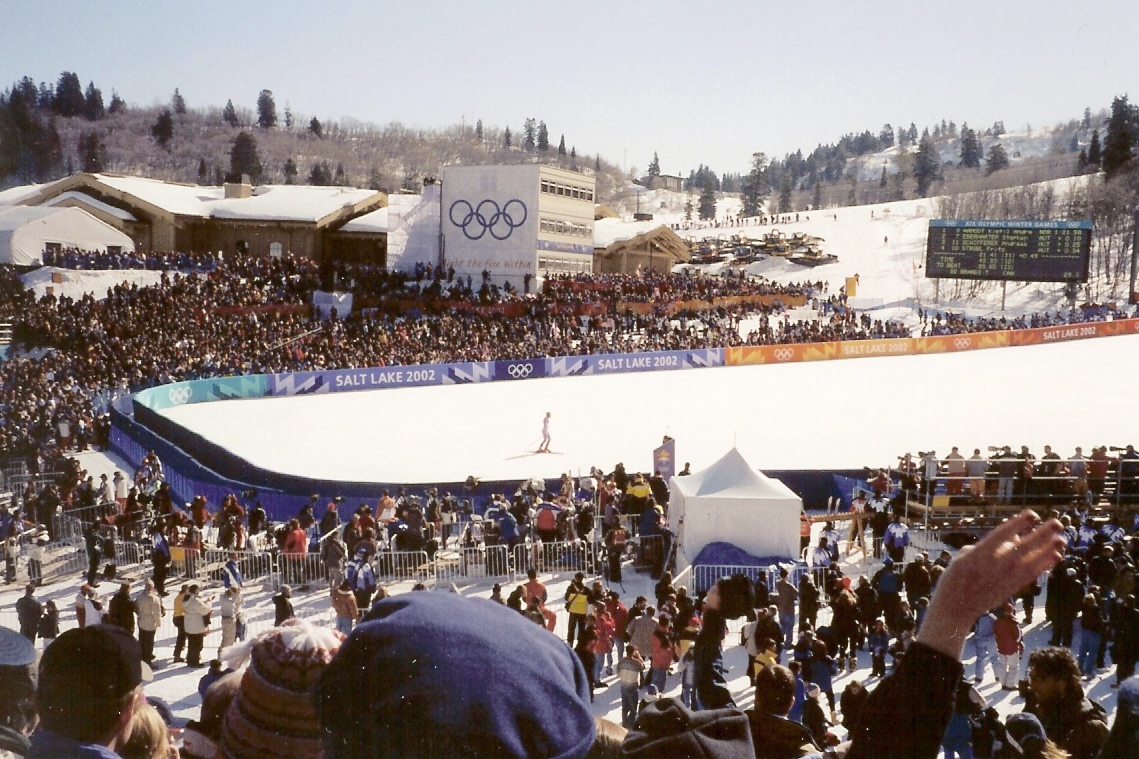
The 2002 Winter Olympics brought 2,500 athletes from 77 countries to Utah just five months after September 11. The games came off well, showcased Utah's mountains and communities to a global audience, and left behind world-class venues still in use today. Utah organized and executed at a level the world noticed, and will prove it again when the Winter Olympics come back in 2034.
250 Years Later
From the first expedition journals in 1776 to the golden spike in 1869 to the steel that helped win a world war, Utah has been part of the American story in ways that go well beyond its borders. Explorers mapped it. Soldiers marched through it. Settlers built it. Engineers connected it. Workers produced what the country needed. A farm boy from Beaver changed how the world communicates.
That is 250 years of being present when it mattered. And on this July 4th, we think that's worth celebrating.
Happy 250th, America. And happy 130th to the 45th state.